


The 21 best digital microscope brands
AmScope, KEYENCE and Andonstar lead our ranking of 21 digital microscope brands. Compare what each brand makes, visit its official site, or shop it online.
Digital Microscope brands, ranked
TSCentral is reader-supported: we may earn a commission when you shop through links on this page. It does not affect the ranking.
-
1
AmScope
USB and CMOS microscope cameras that fit most eyepieces, a popular budget pick for schools and labs.
Top products: MD500-CK· MU1803
Website: amscope.com |Brands like AmScope
Popularity 10.0/10
-
2

KEYENCE
Industrial inspection specialist whose VHX digital microscopes suit factory measurement and quality control work.
Website: keyence.com |Brands like KEYENCE
Popularity 6.0/10
-
3

Andonstar
Screen-equipped digital microscopes with HDMI output, popular with hobbyists and repair technicians for affordable magnification.
Top products: AD246S-M
Website: andonstar.com |Brands like Andonstar
Popularity 5.1/10
-
4

Celestron
Astronomy optics maker whose handheld and LCD digital microscopes lean toward education and hobby use.
Top products: Digital Microscope Pro· LCD Digital Compound Microscope
Website: celestron.com |Brands like Celestron
Popularity 4.9/10
-
5

Nikon
Camera and optics giant whose microscope line runs from lab-grade research stands to camera adapters.
Website: nikonusa.com |Brands like Nikon
Popularity 4.5/10
-
6

Olympus
Laboratory-grade optical microscopes used in clinical and university settings, with digital camera options for imaging.
Website: olympusmedical.co.in |Brands like Olympus
Popularity 4.3/10
-
7
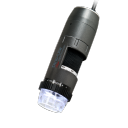
Dino-Lite
Handheld USB microscopes with built-in polarised lighting options, often used in industrial inspection and skin checks.
Website: dinolite.us |Brands like Dino-Lite
Popularity 3.7/10
-
8

Jiusion
Budget digital microscope kits bundled with cases and accessories, suited to students and home users.
Website: jiusion.com |Brands like Jiusion
Popularity 2.9/10
-
9

Leica
Wetzlar-built optics in its DVM line, with a motorised zoom head and 3D surface measurement software.
Website: us.leica-camera.com |Brands like Leica
Popularity 2.8/10
-
10

Motic
Microscope maker covering medical, industrial and teaching markets, with digital imaging and pathology systems.
Website: motic.com |Brands like Motic
Popularity 2.7/10
-
11

ZEISS
Stemi stereo bodies and Axio stands from Oberkochen, with modular optics for research and surgery.
Website: zeiss.com |Brands like ZEISS
Popularity 2.6/10
-
12

VELAB
US lab equipment maker offering digital microscopes alongside general instruments for teaching and industry.
Website: velab.net |Brands like VELAB
Popularity 2.5/10
-
13

Parco Scientific
Parco Scientific supplies microscopes to schools, clinics and hobbyists, and works with instructional and healthcare buyers. Its range covers compound, light and digital models, along with kits. The company is owned by people who work in the science equipment sector...
Website: parcoscientific.com |Brands like Parco Scientific
Popularity 2.5/10
-
14

OMAX
Omax, a globally acclaimed Swiss watchmaking brand, has successfully affixed its position in the industry. A blend of aesthetics and fashion is evident in its striking vintage collection. And you cannot take your eyes off its trend collection either! Its...
Website: omaxwatches.com |Brands like OMAX
Popularity 2.3/10
-
15

Supereyes
Supereyes is a hi-tech company that aces in USB microscopes and endoscopes. They manufacture high-quality products that provide solutions to IT, finance, textile, and many other industries in need. They are highly proficient and efficient, being trusted for many years....
Website: supereyes-store.com |Brands like Supereyes
Popularity 2.0/10
-
16

Aven
Aven produces precision hand tools and optical inspection equipment for electronics assembly, including nose pliers, screwdrivers, digital microscopes and soldering tips. Custom parts and tooling are also offered, and its engineers can design tailored solutions for industrial buyers.
Website: aventools.com |Brands like Aven
Popularity 1.7/10
-
17

Koolertron
Koolertron began in 2009 in Hong Kong and Shenzhen, China. The brand sells optical and camera accessories, including bags and microscopes, along with other gadgets. It is part of Hong Kong Karstone Technology.
Website: koolertron.com |Brands like Koolertron
Popularity 1.4/10
-
18

BoliOptics
Industry experts since 1994, BoliOptics has been designing and manufacturing microscopes and optical instruments. They also modify their products that align with the consumer's needs and fit their applications. They provide the best quality microscopes at a great price. All...
Website: bolioptics.com |Brands like BoliOptics
Popularity 1.1/10
-
19

Levenhuk
Levenhuk builds binoculars, telescopes and microscopes for hobbyists and students of natural science, with instruments for both casual observation and close study. Its catalogue extends to microscope slides, star charts and optics cleaning supplies for those who use its instruments.
Website: levenhuk.com |Brands like Levenhuk
Popularity 1.1/10
-
20

Meiji
Meiji develops food and pharmaceutical products. The company believes in offering edible products to improve health and help consumers eat more healthily. Meiji has two major segments- food and pharmaceuticals. The food segment has all the products, from dairy and...
Popularity 1.1/10
-
21

Fisher
Fisher Scientific Company, Inc. is a global provider of goods and services for molecular biology, genomics, biotechnology research, and the diagnostics business, which supports clinical laboratories. Fisher Scientific also provides a wide range of laboratory equipment, tools, instruments, and consumables...
Popularity 1.1/10
Official websites and social accounts
| Brand | Website | X / Twitter | YouTube | ||
|---|---|---|---|---|---|
| AmScope | amscope.com | – | – | – | – |
| KEYENCE | keyence.com | /KeyenceUSA | – | @keyenceusa | – |
| Andonstar | andonstar.com | – | – | – | – |
| Celestron | celestron.com | /celestron | celestronuniverse | @Celestron | CelestronDotCom |
| Nikon | nikonusa.com | /nikonusa | nikonusa | @NikonUSA | – |
| Olympus | olympusmedical.co.in | – | – | – | – |
| Dino-Lite | dinolite.us | /DinoLite | dinolite.us | @DinoLiteUS | – |
| Jiusion | jiusion.com | /jiusion | – | – | – |
| Leica | us.leica-camera.com | /LeicaBirding | leicacamerausa | @leicacamerausa | Leica Sport Optics Birding |
| Motic | motic.com | – | – | – | – |
Digital Microscope Buying Guide: Everything You Need to Know
Microscopes are essential tools in the field of science and research. They allow scientists, researchers and professionals to examine specimens and samples in detail, providing accurate and insightful data. The traditional optical microscope technology was sufficient for human needs for many years, but the digital revolution has changed the game. Digital microscopes are the future of microscopy. They provide magnified images and videos that are easy to capture, store and share with others. But what is a digital microscope and what should you look for when buying one? This guide will take you through everything you need to know about digital microscopes.
What is a digital microscope?
A digital microscope is a type of microscope that allows you to capture images and videos of the specimen you are looking at. Instead of looking through eyepieces like a traditional microscope, you can view the specimen on a monitor, laptop, tablet or smartphone. Digital microscopes can also connect to a computer, making it easier to store, edit and share images and videos with others. They work by using a camera to capture the magnified image or video of the specimen and transmitting it through a USB or HDMI cable to a digital device.
What are the different types of digital microscopes?
There are several types of digital microscopes, each designed for a particular application:
USB Digital Microscopes
USB digital microscopes are the most popular type of digital microscope for home or school use. As the name suggests, they connect to a USB port on a computer, laptop or tablet. They offer magnification from 10x to over 1000x, depending on the model. USB digital microscopes are affordable, easy to use and portable, making them ideal for students, hobbyists, or anyone who needs a microscope for occasional use.
WiFi Digital Microscopes
WiFi digital microscopes are similar to USB digital microscopes, but instead of connecting to a computer via a USB port, they connect to smartphones or tablets via Wi-Fi. They allow you to view, capture and share images and videos on your mobile device without the need for a computer. WiFi digital microscopes are convenient and easy to use, but they may have limited functionality compared to USB digital microscopes.
HDMI Digital Microscopes
HDMI digital microscopes offer high-resolution imaging and are ideal for professional use. They connect to a monitor or TV via an HDMI cable, allowing you to display the image in high definition. HDMI digital microscopes offer magnification up to 2000x and have advanced features such as interchangeable lenses, focusing systems and integrated LED illumination.
What are the key features to consider when buying a digital microscope?
When buying a digital microscope, there are several key features to consider:
Magnification
Magnification is the most important feature to consider when buying a digital microscope. It determines how close you can get to the specimen and how much detail you can see. Most digital microscopes offer magnification from 10x to over 1000x, so it's important to consider what magnification you need for your application. If you're looking at small cells or bacteria, you'll need a higher magnification than if you're examining larger specimens.
Resolution
The resolution of the microscope determines the clarity and quality of the image. The higher the resolution, the sharper the image will be. USB and WiFi digital microscopes typically have a resolution of 720p or 1080p, while HDMI digital microscopes can have a resolution up to 4K. It's important to consider the resolution you need for your application.
Illumination
Proper illumination is crucial for getting a clear image. Most digital microscopes have built-in LED illumination that can be adjusted to provide the right amount of light for the specimen you are examining. Some models also have an adjustable aperture to control the amount of light that enters the microscope. When choosing a digital microscope, consider the type and intensity of the illumination required for your application.
Camera Quality
The quality of the camera is important for capturing clear and accurate images and videos. Look for a microscope with a high-quality camera that captures sharp images and has good color reproduction. A good camera will ensure that you can capture and share detailed images and videos easily.
Field of View
The field of view is the area of the specimen you can see through the microscope. A larger field of view allows you to see more of the specimen without having to move the microscope. It's important to consider the field of view required for your application.
Software
The software that comes with a digital microscope is important for capturing, processing and sharing images and videos. Look for a microscope with software that is easy to use and has advanced features such as image and video editing, measurement tools, and image stitching.
Conclusion
A digital microscope is an essential tool for anyone working in science, research or education. When choosing a digital microscope, consider the key features such as magnification, resolution, illumination, camera quality, field of view, and software. Once you have identified your needs, you can choose the type and model of digital microscope that best suits your application. By following the guidelines outlined in this guide, you will be well-equipped to make an informed decision when buying a digital microscope. Happy shopping!


