
The most popular brands for Float Switch Includes Gems, Madison, Dayton, uxcell, Dwyer, Johnson Controls, Rexroth, Consolidated, Crydom, ACE among many others.

Gems Sensors create pure gems when it comes to sensors and controls. They manufacture a wide range of sensors for measuring liquid level, flow, and pressure. These sensors are useful in industries like Food and Printing. They also make solenoid valves and proximity switches that you'll find in different objects that you interact with daily. You can rely on Gems sensors for all your sensing needs.

Madison is an online fashion business that sells designer creations for a pinch of the cost. Thanks to their collection of current, stylish, and edgy trends, you'll discover everything you need to change your wardrobe with ease. They provide their clients a mix of traditional and trendy styles that will keep you appearing fashionable without breaking the wallet, which is why they name themselves "Life's Little Luxuries."

A global pioneer in providing top-notch electrical and locomotive components to the railroad and industrial sectors is Dayton-Phoenix Group (DPG). Due to its dedication to excellence, innovation, and customer service, DPG has been in business for over a century. The company provides premium-quality conductors, cables, insulators, switchgear, and other railway components. Through a wide range of goods and services, they focus on giving their clients the most dependable, affordable solutions accessible.

UXCell is an e-Commerce platform with a transparent manufacturing process. Based in Hong Kong, it has been catering to millions of consumers since its inception in 2004. Its direct linkage with over 100 factories in China allows you to bargain with a factory to get the best deals on your products. Its smooth functioning is managed by its skilled team of experts that ensure customers are happy with the products they receive.

Dwyer is the most growing brand in technology that has enhanced computer software incorporated with the measuring system that has to be accurate and precise. Dwyer sells premium quality temperature detectors, bimetal thermometers, manometers, air velocity transmitters, and anemometers. They manufacture the measuring products and the technical things that help this system work efficiently, and these are the switches, valves, and transmitters like remote and integral coil valves, capacitive level switches, and many more.
Johnson Controls is the leading developer and producer of HVAC application solutions. Their company provides clients with integrated solutions to fulfill their demands in sectors like commercial buildings and industrial facilities. They provide various goods, including temperature control devices, sensors, actuators, controllers, software/hardware systems, and services. They assist businesses in creating and implementing energy-efficient solutions that save expenses, boost productivity, and enhance comfort in various settings, including office buildings, schools, and colleges.

In the 1950s, Bosch Rexroth entered the hydraulics sector as the leading machine control technologies provider. Its legacy involved constant evolutions since its establishment as an iron manufacturer. It ensures efficient, powerful, and safe movement in machines and systems. With over 80 locations worldwide, the company is expanding this sector with innovative solutions that meet the needs of both series and special machine manufacturers.
Consolidated is a globally recognized leader and full-service, dependable pressure relief valve solutions provider. Their success has been rooted in...

Sensata Technologies is a leading technology brand under the umbrella of Crydom, with an international presence and renown. They aim...

Ace natural possesses the most organic and natural foods promoting healthy living among its customers. Originating from New York City,...

Triton Signal is a global pioneer in designing and manufacturing lighting, signaling, and communication solutions. It is a one-stop-shop for...

Digital publication Martin is devoted to all things Aston Martin. The publication has established itself as the go-to resource for...

CSI Exterminators offers the most effective products to prevent insect infestations, bed bugs, rodents, and other animals. These infestations can...

Precision Medical Inc. is a global respiratory care pioneer focusing on medical equipment production. Precision has revolutionized percutaneous lung surgery...

Advance Instrument Inc. has excellent prowess in electric measurement technology and has progressed in various fields with a farreaching outcome....

AMTEK is a renowned packaging solutions company that makes well-engineered and researched packaging for challenging environments. Their end-to-end electronic packaging...

Nordson is a pioneer in precision dispensing, fluid management, and related technologies. They design, manufacture, and sell dispensing equipment, instrumentation,...
Myers furniture is an absolute website where you can get an extensive range of furniture, mattresses, and appliances ranging from...
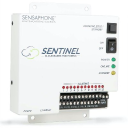
Sensaphone is a global innovator of remote monitoring solutions that continuously and remotely measure and monitor. The device will tailor...
A float switch is an integral component of many water, sewage, and liquid level control systems. It allows for the control of the flow of fluids, including water, gas, oil, and other liquids, by utilizing the buoyancy principle. Float switches are an efficient, reliable, and cost-effective way of controlling levels, ensuring that fluids are filled or drained as required, and protecting against overflow or underflow. However, in order to get the most out of a float switch, it is important to understand what they are, how they work, and what factors you should consider when selecting the right one for your needs. In this buying guide, we delve into these questions and provide guidance for choosing the best float switch for your application.
A float switch is essentially a simple on/off switch that responds to changes in the level of a fluid by activating or deactivating its internal switch mechanism. The switch mechanism is housed inside a sealed stem, which attaches to a float ball that rises and falls with the fluid level. As the float ball rises, it pushes the stem upwards, activating the switch, which in turn energizes a pump, alarm, solenoid valve, or other device connected to the switch. Conversely, as the fluid level drops and the float ball lowers, the stem moves downwards, deactivating the switch, which then de-energizes the connected device.
Float switches come in many shapes, sizes, and configurations, but most have a similar basic design. The float ball is typically made of plastic, stainless steel, or another buoyant material, while the stem is made of plastic, stainless steel, brass, or other materials. The switch mechanism inside the stem can be a simple mechanical switch or a more complex electronic switch, depending on the application and the level of precision required.
The operation of a float switch depends on the specific application and the type of switch used. However, in general, float switches work by utilizing the buoyancy principle. When a float ball is placed in a fluid, it will float on the surface of the fluid, displacing a volume of fluid equal to its own weight. As the fluid level rises or falls, so too does the float ball, which in turn moves the switch mechanism inside the stem. This movement can be used to trigger a variety of actions, such as turning on or off a pump, opening or closing a valve, or sending a signal to an alarm or control system.
Float switches can be configured in several ways, depending on the application and the desired level of control. Some float switches are designed to sense a high liquid level and trigger an alarm or shutdown to prevent overflow. Others are designed to sense a low liquid level and trigger a pump or valve to fill or drain the fluid. Still, others are designed to sense a specific fluid level and maintain that level within prescribed limits. Some float switches are also designed to be used in hazardous environments, such as those with explosive gases or liquids, where safety is an important consideration.
There are several types of float switches available on the market, each designed for a specific application and level of precision. The most common types of float switches are:
Mechanical float switches are the simplest and most basic type of float switch. They consist of a float ball attached to a stem that moves a mechanical switch inside the stem. When the float ball rises or falls with the fluid level, it moves the stem up or down, triggering the switch to turn on or off. Mechanical float switches are relatively inexpensive, easy to install, and require no external power, making them ideal for simple applications such as sump pumps, septic tanks, and water tanks. However, they are generally less precise than electronic float switches and may wear out more quickly.
Electronic float switches use electronic sensors and controllers to detect changes in fluid levels and activate their switch mechanism. They can be more precise, reliable, and durable than mechanical float switches, and allow for more control over the timing, volume, and flow of fluids. Electronic float switches can also be integrated into more complex control systems, such as SCADA systems or process automation systems, to optimize efficiency, reduce waste, and enhance safety. However, they are generally more expensive than mechanical float switches, require external power and wiring, and may be more complex to install and maintain.
Reed switch float switches use a magnet and a reed switch to detect changes in fluid levels. When the float ball rises or falls with the fluid level, it moves the magnet inside the stem, which in turn moves a reed switch, triggering it to turn on or off. Reed switch float switches are generally inexpensive, reliable, and durable, and can be used in a variety of applications, such as HVAC systems, wastewater treatment, and fuel tanks. However, they may be less precise than other types of float switches, and may be affected by external magnetic fields or shock.
Mercury float switches use the properties of liquid mercury to detect changes in the level of a fluid. When the float ball rises or falls with the fluid level, it tilts the stem, causing the mercury to flow and complete a circuit between two electrodes, triggering the switch to turn on or off. Mercury float switches are highly accurate, reliable, and durable, and can be used in applications requiring precise control over fluid levels, such as chemical processing, food and beverage processing, and pharmaceutical production. However, they are generally more expensive than other types of float switches, and may pose environmental and health risks due to the toxicity of mercury.
When selecting a float switch for your application, there are several factors you should consider to ensure that you get the right switch for your needs. Some of these factors are:
The type of fluid you are controlling is an important consideration when choosing a float switch. Some fluids, such as corrosive or abrasive liquids, may require a more durable or resistant float switch material, such as stainless steel, titanium, or ceramic. Other fluids, such as oils or fuels, may require a switch that can handle high temperatures or explosive environments. Make sure that the float switch you choose is compatible with the fluid type and properties of your application.
The level range of the fluid you are controlling is another important consideration. Some float switches are designed for high level sensing, while others are designed for low level sensing. Still, others are designed for precise level sensing in a specific range. Make sure that the float switch you choose can sense the level range of your application and provide the desired regulation or control.
The type of switch used in the float switch is also an important consideration. Some float switches use mechanical switches, while others use electronic switches or reed switches. The type of switch used will affect the precision, reliability, and cost of the float switch. Choose a switch type that is suitable for your application requirements and budget.
The mounting type of the float switch is also an important consideration. Some float switches are designed for vertical mounting, while others are designed for horizontal, angle, or side mounting. Make sure that the float switch you choose is compatible with the mounting configuration of your fluid container or tank.
The connection type of the float switch is also important. Some float switches have screw-on, flange, or clamp-on connections, while others have wire leads or quick-connect terminals. Make sure that the connection type of the float switch is compatible with your installation and wiring needs.
The enclosure type of the float switch is also important, especially for applications in harsh environments or hazardous locations. Some float switches have weatherproof, explosion-proof, or flameproof enclosures, while others have open or sealed enclosures. Make sure that the enclosure type of the float switch is suitable for your application environment and safety requirements.
The cost of the float switch is an important consideration, but should not be the sole determining factor. While mechanical float switches are generally less expensive than electronic or mercury float switches, they may not provide the precision, durability, or reliability required for certain applications. Make sure that you choose a float switch that is suitable for your application requirements, but also within your budget.
A float switch is an essential component of many fluid control applications, providing reliable, efficient, and cost-effective level sensing and regulation. By understanding the types of float switches available, how they work, and what factors to consider when selecting the right one, you can ensure that you get the best float switch for your specific needs. Whether you are controlling the level of water in a sump pump, the level of oil in a fuel tank, or the level of chemicals in a chemical process, a float switch can help you achieve your goals with ease and confidence.
Top similar topics to Float Switch Includes Limit Switches, Solid State Relays, 12V Relay among many others.


