
The 22 best monocular night vision brands
Stealth Cam, Gosky and Minolta lead our ranking of 22 monocular night vision brands. Compare what each brand makes, visit its official site, or shop it online.
Monocular Night Vision brands, ranked
TSCentral is reader-supported: we may earn a commission when you shop through links on this page. It does not affect the ranking.
-
1
Stealth Cam
Trail camera maker's battery monocular with built-in infrared lights and optional rangefinder for judging distance after dark.
Top products: STC-XNVM· STC-NVM
Website: stealthcam.com |Brands like Stealth Cam
Popularity 10.0/10
-
2

Gosky
Gosky Optics transports you into realms beyond our solar system with the help of its telescopic accessories. They sell telescope eyepieces, filters, and much more that will make space geeks cry out of joy. They also provide accessories for microscopes that will let you observe those bacteria a little more closely. They offer the best quality equipment at the best prices. Also, their customer service is excellent.
Website: goskyoptics.com |Brands like Gosky
Popularity 8.0/10
-
3
Minolta
Licensed Minolta-badged digital monoculars with built-in 4K video recording, suited to people who want to record what they see at night.
Top products: MNDM10B
Website: kmbs.konicaminolta.us |Brands like Minolta
Popularity 8.0/10
-
4
Bushnell
Equinox digital monoculars with infrared illumination, alongside a wider Bushnell range of binoculars, riflescopes and rangefinders.
Top products: Equinox Z2
Website: bushnelloptics.com |Brands like Bushnell
Popularity 7.3/10
-
5

ATN
US-made digital monoculars, including waterproof models with video recording, built for hunters, security users and defence buyers.
Top products: DNVM6· Night Storm
Website: atncorp.com |Brands like ATN
Popularity 6.8/10
-
6

Night Owl Optics
Affordable digital monoculars with infrared illumination and photo and video recording, mostly used for home security and wildlife watching.
Top products: NOXM50-DG
Website: nightowloptics.com |Brands like Night Owl Optics
Popularity 3.8/10
-
7
Barska
Budget-friendly digital monocular with photo and video capture, sold alongside the company's binoculars, scopes and safes.
Top products: BQ14070 NV-1
Website: shop.barska.com |Brands like Barska
Popularity 3.8/10
-
8

Luna Optics
Digital night vision monoculars with built-in recording and several magnification options, sold direct from a US company.
Website: lunaoptics.com |Brands like Luna Optics
Popularity 3.5/10
-
9

National Geographic
National Geographic illuminates and conserves our world's wonders through science, adventure, education, and storytelling. Ocean explorers, scientists, educators, storytellers, and others were among them. Explorers work on the cutting edge of innovation to inspire, educate, and find new and innovative...
Website: nationalgeographic.com |Brands like National Geographic
Popularity 3.1/10
-
10

Visionking
Mainland-made monoculars and rifle scopes, often compared with European optics but priced lower.
Website: visionkingscope.com |Brands like Visionking
Popularity 2.7/10
-
11
Roxant
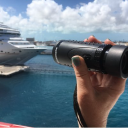
Roxant produces binoculars, monoculars, telescopes and camera stabilizers for outdoor use. Its optics are described as dust, shock and waterproof. The brand also includes a video stabilizer and an action camera stabilizer for filming while moving. Warranty coverage depends on...
Website: roxant.com |Brands like Roxant
Popularity 2.7/10
-
12

Celestron
Celestron is the most well-known astronomy brand in the world. For more than 45 years, they have defined what it means to be an astronomer, leaving a legacy of telescope design innovation and inspiring generations of astronomers to explore our...
Website: celestron.com |Brands like Celestron
Popularity 2.7/10
-
13

Steiner
Steiner designs binoculars for hunting, marine and tactical use. Its models include the Predator, Nighthunter and 7x50 Military/Marine. Marine binoculars are waterproof and fog resistant, built to hold up in harsh conditions. Low-light options suit dusk hunting, while compact rugged...
Website: steiner-optics.com |Brands like Steiner
Popularity 2.2/10
-
14

Sightmark
Red dot and night vision devices for rifles, with monoculars and goggles in its range.
Website: sightmark.com |Brands like Sightmark
Popularity 2.2/10
-
15

Bell and Howell
Bell and Howell began in the camera and projector business and is linked with vintage Super 8 film cameras and lenses. Its equipment is often sought by collectors and by people shooting home movies on classic film gear.
Website: bell-howell.com |Brands like Bell and Howell
Popularity 2.2/10
-
16
Tasco
Older optics name whose NV 100/100 monocular scope uses an infrared illuminator for dark-field viewing.
Top products: NV 100/100
Website: bushnelloutdoors.com |Brands like Tasco
Popularity 2.2/10
-
17
Nightfox
Head-mount digital monoculars with hands-free mounting and onboard storage, aimed at wildlife watchers and night users.
Top products: Prowl 2· Prowl Digital HD
Website: nightfoxstore.com |Brands like Nightfox
Popularity 1.6/10
-
18
Pulsar
Pulsar watches are made by Seiko and offer Japanese quartz movements at accessible prices. The men's collection includes chronograph and sport models with water resistance, and women's styles come in matching designs. Watch bands are sold separately for swapping straps.
Website: pulsarshop.com |Brands like Pulsar
Popularity 1.6/10
-
19

SIG SAUER
The P320 pistol is one of the most widely recognised models from SIG SAUER, which also makes rifles, airguns, hunting equipment and pistol holsters. The company is headquartered in New Hampshire and supplies firearms to military and law enforcement buyers...
Website: sigsauer.com |Brands like SIG SAUER
Popularity 1.6/10
-
20
KONUS
Discover gear and products for sports and vision at Konus! Look at their catalog on their website to get the essence of what the company supplies. The remarkable lenses and telescopes are available for almost every sector. Compact backpacks with...
Website: konus.com |Brands like KONUS
Popularity 1.6/10
-
21

SVBONY
Ever wonder about the shiny objects in the sky. Svbony allows its customers to explore every element of the land and the sky through their incredible optical lenses. This Chinese enterprise offers telescopes, astronomy cameras, spotting scopes, binoculars, monoculars, and...
Website: svbony.com |Brands like SVBONY
Popularity 1.6/10
-
22

Hawke
Hawke Optics is a leader in making high-quality optical equipment like binoculars and spotting scopes used in shooting and bird watching. Their products help in precise distance management and have features like laser finders. The brand has slowly expanded and...
Website: hawkeoptics.com |Brands like Hawke
Popularity 1.6/10
Official websites and social accounts
| Brand | Website | X / Twitter | YouTube | ||
|---|---|---|---|---|---|
| Stealth Cam | stealthcam.com | /stealthcam | v | – | – |
| Gosky | goskyoptics.com | – | – | – | – |
| Minolta | kmbs.konicaminolta.us | /KonicaMinoltaUS | konicaminoltaus | @KonicaMinoltaUS | KonicaMinoltaUS |
| Bushnell | bushnelloptics.com | – | – | – | – |
| ATN | atncorp.com | /ATNNightVision | atncorp | @ATN_NightVision | NightVisionOptics |
| Night Owl Optics | nightowloptics.com | – | – | – | – |
| Barska | shop.barska.com | /BarskaOptic | barska_optics | @BarskaOptics | barskaoptics |
| Luna Optics | lunaoptics.com | /LunaOpticsNightVision | – | – | – |
| National Geographic | nationalgeographic.com | – | – | – | – |
| Visionking | visionkingscope.com | – | – | – | – |
