


The 28 best piano keyboard brands
Yamaha, Casio and Korg lead our ranking of 28 piano keyboard brands. Compare what each brand makes, visit its official site, or shop it online.
Piano Keyboard brands, ranked
TSCentral is reader-supported: we may earn a commission when you shop through links on this page. It does not affect the ranking.
-
1
Yamaha
Its portable lineup spans compact 61-key models through weighted digital pianos for home use.
Top products: PSR-E383· PSR-E483· PSS-270
Website: usa.yamaha.com |Brands like Yamaha
Popularity 10.0/10
-
2

-
3

Korg
Synth-led brand whose keyboards lean toward workstation sound engines and performance features.
Website: korg.com |Brands like Korg
Popularity 5.5/10
-
4

Akai
Pad controllers and MPC-linked keyboards suit producers who sequence beats alongside their playing.
Top products: MPK Mini
Website: akaipro.com |Brands like Akai
Popularity 5.2/10
-
5

Roland
Modelled acoustic piano tone anchors Roland's digital pianos, from compact home models up to stage workstations.
Top products: FP-10
Website: roland.com |Brands like Roland
Popularity 4.7/10
-
6

Alesis
Affordable 88-key digital pianos and MIDI controllers suit home players and small project studios.
Website: alesis.com |Brands like Alesis
Popularity 3.0/10
-
7

NORD
Stage pianos and electro-style keyboards with a reputation for hands-on tone shaping and premium build.
Website: nordkeyboards.com |Brands like NORD
Popularity 2.7/10
-
8

Kurzweil
Sampling-heritage brand whose digital pianos are valued for realistic grand piano samples.
Website: kurzweil.com |Brands like Kurzweil
Popularity 1.7/10
-
9

Technics
Japanese hi-fi heritage shows in digital pianos with hammer-action keys and built-in speakers.
Website: technics.com |Brands like Technics
Popularity 1.6/10
-
10

Fender
Leo Fender’s ambition was to design an instrument that was functional and easy to operate. With that in mind, he created a unique guitar. Fender guitars prioritized volume and fun tones when used. Going back to as far as 1946,...
Website: fender.com |Brands like Fender
Popularity 1.3/10
-
11

Suzuki
Acoustic upright pianos and chromatic harmonicas form the core, with beginner keyboards aimed at music schools.
Popularity 1.3/10
-
12

Arturia
Software-first company whose keyboard controllers pair closely with its virtual instrument library.
Website: arturia.com |Brands like Arturia
Popularity 1.3/10
-
13

Studiologic
Italian maker of digital pianos and stage keyboards with strong organ and vintage electric sounds.
Website: studiologic-music.com |Brands like Studiologic
Popularity 1.1/10
-
14

Novation
Controller keyboards with tight DAW integration, plus launchpads and groove boxes for beat-making.
Website: support.novationmusic.com |Brands like Novation
Popularity 1.1/10
-
15

First Act
Child-sized keyboards built for learning, with simple controls and colourful presets.
Website: firstact.com |Brands like First Act
Popularity 1.0/10
-
16

HOHNER
Hohner manufactures musical instruments such as harmonicas and accordions to enjoy and celebrate the passion for music. Matthias Hohner founded it in Trossingen, Germany, in 1857. Hohner, along with its dedicated yet qualified artisans, devotes itself as a brand to...
Website: hohner.de |Brands like HOHNER
Popularity 0.8/10
-
17

CRUMAR
Crumar is the maker of strong power keyboards, with a diverse product line that caters to every need and want, from professional to novice. Its goods, which include organs, pianos, guitars, and synthesizers, are famous for their quality, craftsmanship, and...
Website: crumar.it |Brands like CRUMAR
Popularity 0.7/10
-
18

MOOG
MOOG began way back in 1951. Founders Bill and Art Moog, and Lou Geyer started the company with limited resources. The company had grown a lot with time. Now, MOOG is focused on developing and manufacturing advanced motion control products....
Popularity 0.7/10
-
19

Bontempi
Every kid wants a toy that plays music; it can be a toy phone or an electronic piano. Bontempi offers a wide variety of toy musical instruments to let every child discover the artist inside them. From wind instruments like...
Website: bontempi.com |Brands like Bontempi
Popularity 0.6/10
-
20

Native Instruments
Native Instruments, started in Berlin, develops software for computer-based music production. The company also makes hardware for DJs and producers. Its Traktor and Maschine lines are widely used by both amateur and professional producers. The software is built for people...
Website: native-instruments.com |Brands like Native Instruments
Popularity 0.5/10
-
21

Behringer
Since 1989, Behringer has been engaged in the production of professional audio equipment like Microphones and Amplifiers. They make portable sound systems used in DJ and EDM, and their equipment can also be found in major studios worldwide. They are...
Website: behringer.com |Brands like Behringer
Popularity 0.5/10
-
22

Viscount
Music resonates with everyone irrespective of age and taste. Viscount is a company that manufactures unparalleled sound and music systems and instruments. The products offer high quality provided by the company’s dedication to innovation and exclusive performance. The brand serves...
Website: viscountinstruments.com |Brands like Viscount
Popularity 0.5/10
-
23
Wurlitzer
Wurlitzer gives you an exciting range of musical instrument collections that let you enjoy melodious music and provide autographs and manuscripts. The gift section has a range of products related to original period photographs, opera, soloists, and other vintage styles....
Popularity 0.5/10
-
24

Kimball
Kimball builds grand pianos, baby grands, upright pianos and electronic keyboards. Its vintage grand pianos were built in Chicago, and Kimball grands are generally regarded as mid-tier instruments that suit schools, teachers and home players.
Website: kimball.com |Brands like Kimball
Popularity 0.4/10
-
25

Fatar
Instruments are an essential part of the music industry, and any music would be incomplete without the soothing melody of instruments. Fatar aims to add to making every song beautiful by designing and manufacturing all types of keyboards, so you...
Website: fatar.com |Brands like Fatar
Popularity 0.4/10
-
26

Ketron
In today's world of fast-paced advancements in technology, sound and music production is gradually emerging as a highly competitive space that generates the latest innovations of the day. At Ketron, professional music producers can find a variety of musical instruments...
Website: ketron.it |Brands like Ketron
Popularity 0.4/10
-
27
ARP
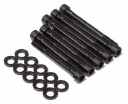
When constructing a new high-performance engine, you know which direction to go on the big purchases. The topping list includes a fabricated working kit, high-flowing aluminum heads, and a stunning camshaft, but keeping all of those elements together as the...
Website: arp-bolts.com |Brands like ARP
Popularity 0.4/10
-
28

CME
The leading wireless MIDI business is CME. They create and provide Bluetooth, USB, and wired solutions for musical instruments. World-class manufacturers of musical instruments employ their technology. The comprehensive user interface that CME uses for its devices supports all popular...
Website: cme-pro.com |Brands like CME
Popularity 0.4/10
Official websites and social accounts
| Brand | Website | X / Twitter | YouTube | ||
|---|---|---|---|---|---|
| Yamaha | usa.yamaha.com | /YamahaMusicUSA | yamahamusicusa | @yamahamusicusa | – |
| Casio | casio.com | – | – | @Casio_USA | – |
| Korg | korg.com | /korgusa | korgofficial | @korgusa | – |
| Akai | akaipro.com | /AkaiPro | akai_pro | @akai_pro | akaiprovideo |
| Roland | roland.com | /OfficialRolandAIRA | roland.experience.channel | @RolandExpCh | Roland Cloud |
| Alesis | alesis.com | /Alesis | alesis_gear | @Alesis | AlesisVideo |
| NORD | nordkeyboards.com | /nordkeyboards | nordkeyboards | @nordkeyboards | Sound Technology Ltd |
| Kurzweil | kurzweil.com | /kurzweilmusicsystems | kurzweilmusic | @KurzweilMusic | KurzweilTutorials |
| Technics | technics.com | /technics.global | technics_global | @technics | TechnicsOfficial |
| Fender | fender.com | /Fender | fender | @Fender | fendermusical |
Piano Keyboard Buying Guide
The piano keyboard is an essential tool for every pianist, whether you're a beginner or a professional player. Choosing the right keyboard can make a difference in the way you create music, and there are many factors to consider before making a purchase.
Types of Keyboards
Before selecting a keyboard, it is important to differentiate between the various types of keyboards available in the market. You'll typically come across the following types:
Acoustic Piano
The acoustic piano is the traditional kind of piano that has been in use for centuries. These pianos consist of strings, hammers and a soundboard that produces the sound. They're typically large and heavy instruments, and their sound is not amplified. They require tuning regularly to maintain their sound quality, and they can be quite expensive.
Digital Piano
Digital pianos have risen in popularity in recent years, and their features have significantly improved over time. They use digital technology to replicate the sound and feel of an acoustic piano, with the added advantage of many features that you won't find in an acoustic piano. Digital pianos come in various sizes and styles, are portable and easy to set up, and can be less expensive than acoustic pianos.
Keyboard Controllers
Keyboard controllers are devices that can be connected to a computer or laptop to control piano software or other software instruments. They don't have built-in sounds, but they're a more affordable way to get access to software instruments and the various sounds they offer. They're also more portable than digital or acoustic pianos and can be an excellent choice for someone who wants to create music on the go.
Keyboard Features to Consider
When selecting a keyboard, there are several features to consider, including:
Number of Keys
The number of keys on a keyboard can vary from as few as 25 keys to as many as 88 keys. For a beginner, a keyboard with 61 keys is sufficient for practice and learning. Advanced players may want a full 88 keys, which is the same as a traditional acoustic piano.
Weighted Keys
Weighted keys are a feature that makes a keyboard feel more like an acoustic piano. Weighted keys simulate the feel of playing on an acoustic piano, where the keys have varying degrees of resistance, depending on the force applied to the keys. Weighted keys are essential for players who want to develop a strong technique and feel like they're playing an acoustic piano.
Tactile Response
Tactile response is the way the keyboard feels when you play it. Good tactile response provides the player with control and precision when playing. A keyboard with a good tactile response is critical for players who want to develop good technique and feel like they're playing an acoustic piano.
Polyphony
Polyphony is the number of notes that a keyboard can play simultaneously. A keyboard with 32-note polyphony can play up to 32 notes at once, and one with 64-note polyphony can play up to 64 notes at once. More advanced players may want a keyboard that can play even more notes simultaneously.
Touch Sensitivity
Touch sensitivity determines the degree of volume and tonal changes that occur when you play hard or soft on the keyboard. Touch sensitivity allows players to play with more expression, as the volume and tone will vary depending on the pressure applied to the keys. Having a keyboard with touch sensitivity is essential for players who want to develop good technique and control.
Sound Quality
The sound quality of a keyboard is one of the most critical factors to consider when making a purchase. Digital pianos typically come with a variety of sound options, including grand pianos, electric pianos, organs, strings, and many others. The sound quality should be realistic and mimic that of an acoustic piano, so you can enjoy your playing experience.
Lesson Features
Many digital pianos come with educational features that are designed to make learning more fun and interactive. These features may include lesson plans, interactive music, and games that teach piano basics. Having a keyboard with lesson features can make learning more enjoyable, and you'll pick up on playing faster.
Portability
If you plan on moving your keyboard around a lot, the portability factor is critical. A lightweight and compact keyboard will be much easier to move around than a bulky and heavy one. You should consider portable stands, carrying cases and bags if you travel around with your keyboard regularly.
Connectivity
Connectivity is a crucial factor to consider if you plan on playing with others or recording your music. You should have the necessary connections, such as USB or MIDI connections, to connect to other devices like computers, tablets and phones. Some keyboards come with built-in speakers, but others may require external speakers, amplifiers or headphones.
Price Range
The price range for keyboards can vary widely, depending on the features you want. An entry-level digital piano can cost between $300 to $500, while a high-end model can cost thousands of dollars. Keyboard controllers can be relatively inexpensive, starting at around $100. If you want an acoustic piano, you'll have to pay a premium price that can exceed $10,000.
Final Thoughts
The piano keyboard is an essential tool for every pianist, and deciding on the right one can be a significant investment. Take the time to consider what features are essential for you, and don't forget to think about your goals and how you plan to use the keyboard. Choosing a keyboard that suits your needs and budget will make a big difference in how much you enjoy playing it, and how much progress you make in your playing.


