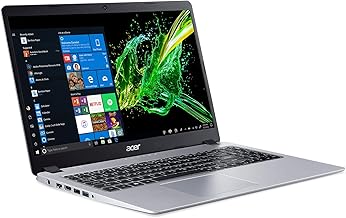
The 15 best laptop brands
Samsung, Dell and HP lead our ranking of 15 laptop brands. Compare what each brand makes, visit its official site, or shop it online.
Laptop brands, ranked
TSCentral is reader-supported: we may earn a commission when you shop through links on this page. It does not affect the ranking.
-
1
Samsung
The famous Korean electronics producer, Samsung, started its journey as a grocery trading store in 1938. Lee Byung-Chull began the business by trading domestically-produced goods and exporting them to China. Soon, the company expanded to include textiles and heavily focused on industrialization. In the 1970s, it invested in petrochemical and similar industries and slowly stepped into the electronics industry. The 80s saw an explosion in its technology business; the rest is history.
Website: samsung.com |Brands like Samsung
Popularity 10.0/10
-
2
Dell
Michael Dell founded PC’s Limited in 1984 with the intent of providing customized upgrades for computers. The initiative was successful, and Dell dropped out of college to start building computers. Soon, he started selling his designs, which were met with tremendous success. Over time, he could offer computers of premium quality at economical prices. In 1988, the company was renamed Dell Computer Corporation and continued to provide modern products.
Website: dell.com |Brands like Dell
Popularity 1.4/10
-
3
HP
The Hewlett-Packard Company was founded when completely electronic computers did not exist. It was 1939, and the only printers were industrial-sized. Its defining feature was its health care plan for its employees and its use of an open office floor plan, allowing for convenient operations. Its manufacture of high-end products allowed it to rapidly gain a presence worldwide, making it one of the most famous technology brands today.
Website: hpl.hp.com |Brands like HP
Popularity 1.2/10
-
4
Lenovo
Lenovo introduced itself to the personal technology market in 2004. However, its history spans a more extended period. In 1984, the company was established under the name Legend Holdings. After becoming Lenovo, it went on to take over the former Personal Computer Division of IBM, the progenitor of the PC industry in the 1980s. Today, Lenovo operates worldwide, serving thousands of customers by creating world-class products.
Website: lenovo.com |Brands like Lenovo
Popularity 0.9/10
-
5
Toshiba
Toshiba's journey started in 1875 and was based on a factory started by Hisashige Tanaka. Tanaka was famous for creating mechanical dolls and perpetual clocks, and his passion for mechanics influenced Toshiba's ventures. The brand provides its customers with world-class technology and electrical products and has made a name. Today, not only can it go toe-to-toe with the biggest names in the high-end technology industry, it is one of its global leaders.
Website: toshiba.com |Brands like Toshiba
Popularity 0.5/10
-
6

ASUS
ASUS is a multinational company founded in 1989 and specialized in consumer electronics and hardware. It is considered people's first choice regarding motherboards and gaming products. The brand snatched its claim to fame in 2007 when it refurbished the PC industry with its creation of the Eee PC. Recently, it even created a smart home robot, Zenbo, to make the lives of households more convenient. As of today, it has won multiple accolades.
Website: asus.com |Brands like ASUS
Popularity 0.5/10
-
7

Acer
Acer is an exceptional ICT company recognized globally and has significant visibility in over 160 countries. Its evolutionary nature allows it to evolve with society, enabling it to keep up with the times. Its main goal is to create a world with fused hardware and software services. This is to allow more opportunities to arise for consumers. Founded in 1976, Acer is dedicated to research and supporting products beyond existing barriers.
Website: acer.com |Brands like Acer
Popularity 0.4/10
-
8

Intel
Who hasn’t heard about Intel, the world’s renowned technology company? Over the years, the company has undertaken corporate responsibilities for various firms boosting global technology. Intel has instilled its state-of-the-art AI in smart devices, participating in the digital revolution. The majority of laptops possess the intel core and graphics today! It is unequivocally shaping the future and making a global impact. Their focus is on how imperative it is to have an idea that uplifts lives and modernizes living.
Website: intel.com |Brands like Intel
Popularity 0.4/10
-
9

MSI
Gaming is becoming one of the leading mainstream activities of the modern world. It's fun, creative, innovative, and most of all, it feels real. To play perfectly, you need a system that does not collapse or heat up when you...
Website: msi.com |Brands like MSI
Popularity 0.4/10
-
10

Fujitsu
IT is a field of knowledge that is growing at an extreme rate. All the ideas and concepts within the stream are proving to be useful for the development. Fujitsu Global is one of the leading IT services providers across...
Website: fujitsu.com |Brands like Fujitsu
Popularity 0.3/10
-
11

Compaq
James Harris and William Murto founded Compaq in 1982 to manufacture high-quality American computers. Its main goal was to build portable computers that could use all software created only for IBM and was, in fact, the first company to succeed...
Website: compaq.com |Brands like Compaq
Popularity 0.2/10
-
12

Micron
Micron is the world's largest supplier of memory modules, solid-state storage, and server equipment. Their award-winning solutions serve various clients, including PC makers, data centers, cloud service providers, Internet behemoths, and scientific research organizations. Micron is dedicated to aiding customers...
Website: micron.com |Brands like Micron
Popularity 0.2/10
-
13

Packard Bell
Packard Bell was born in 1926. They are one of the companies that revolutionized the home entertainment game. Radios, PC, and TV are the primary sectors that they work on. Over the years, home entertainment has changed along with the...
Website: packardbell.com |Brands like Packard Bell
Popularity 0.2/10
-
14
MEDION
Medion offers an extensive inventory of entertainment electronics and information technology products. Along with this, it provides a user-friendly range and can efficiently respond to market demands. The company also offers services in telecommunications, photo services, and similar online niches....
Website: medion.com |Brands like MEDION
Popularity 0.2/10
-
15

PC Specialist
PC Specialist is a consumer-centric manufacturer of electronic products, particularly computers and laptops. The brand’s USP lies in its ability to manufacture customized and built-to-order laptops and PCs. The brand offers products of the finest quality, curated with high-end technology...
Website: pcspecialist.co.uk |Brands like PC Specialist
Popularity 0.2/10
Official websites and social accounts
| Brand | Website | X / Twitter | YouTube | ||
|---|---|---|---|---|---|
| Samsung | samsung.com | /SamsungUS | samsungmobileusa | @SamsungUS | – |
| Dell | dell.com | – | – | – | – |
| HP | hpl.hp.com | – | – | – | – |
| Lenovo | lenovo.com | /LenovoIndia | lenovo_india | @lenovo_in | LenovoVision |
| Toshiba | toshiba.com | /ToshibaAmerica | – | @ToshibaAmerica | toshibainnovation |
| ASUS | asus.com | /AsusIndia | asusindia | @ASUSindia | – |
| Acer | acer.com | /acerindia | Acer | @Acer_India | acer |
| Intel | intel.com | /IntelIndia | intelindia | @IntelIndia | – |
| MSI | msi.com | – | – | – | – |
| Fujitsu | fujitsu.com | /FujitsuICT | – | @Fujitsu_Global | – |