
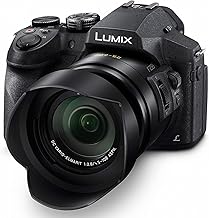

The 20 best bridge camera brands
Sony, Nikon and Fujifilm lead our ranking of 20 bridge camera brands. Compare what each brand makes, visit its official site, or shop it online.
Bridge Camera brands, ranked
TSCentral is reader-supported: we may earn a commission when you shop through links on this page. It does not affect the ranking.
-
1
Sony
Cyber-shot bridge models pair long zooms with compact bodies and a sturdy, widely available range.
Top products: Cyber-shot DSC-H300· Cyber-shot DSC-H400V· Cyber-shot DSC-R1
Website: sony.com |Brands like Sony
Popularity 10.0/10
-
2
Nikon
Coolpix bridge cameras lean toward easy point-and-shoot use with very long optical zooms.
Top products: Coolpix L330· Coolpix P500· Coolpix L810
Website: nikonusa.com |Brands like Nikon
Popularity 8.2/10
-
3

Fujifilm
FinePix S-series models are a long-running pick for budget superzoom shooting with manual controls.
Top products: FinePix S1800· FinePix S2980· FinePix S8600
Website: fujifilm.com |Brands like Fujifilm
Popularity 6.2/10
-
4

Canon
PowerShot SX models offer some of the longest zooms in the range with optical image stabilisation.
Top products: PowerShot SX130 IS· PowerShot SX500 IS· PowerShot SX530 HS
Website: global.canon |Brands like Canon
Popularity 6.2/10
-
5
Kodak
PIXPRO bridge cameras are budget-friendly superzooms, including infrared-converted and 40x models.
Top products: PIXPRO AZ401· PIXPRO AZ528· PIXPRO AZ251
Website: resources.kodak.com |Brands like Kodak
Popularity 5.2/10
-
6

Samsung
Its WB-series bridge cameras offer long zooms at low cost, with flip-out screens on vlogging models.
Top products: WB1100F· MV800· WB100
Website: samsung.com |Brands like Samsung
Popularity 5.1/10
-
7

Panasonic
Lumix FZ superzooms are a strong pick for 4K video and very long optical zoom ranges.
Top products: LUMIX DMC-FZ28· LUMIX DC-FZ80· LUMIX DMC-LZ20
Website: panasonic.com |Brands like Panasonic
Popularity 4.5/10
-
8

Olympus
SP-series bridge cameras carry long zooms in a compact body, often with a rugged feel.
Top products: SP-590UZ· SP-610UZ· SP-510UZ
Website: olympusmedical.co.in |Brands like Olympus
Popularity 3.5/10
-
9

Konica Minolta
Konica Minolta can transform your business. They deal with the digital workspace, to be particular. They aim to solve the problems you might face in the future with your online presence and working experience. The world is already connected, and...
Website: kmbs.konicaminolta.us |Brands like Konica Minolta
Popularity 3.5/10
-
10

Casio
Casio designs digital and timer watches, including shock resistant models in its G-Shock line. Its men's digital watches offer practical functions such as stopwatches and alarms. The company also makes regular and scientific calculators, so its range covers both timekeeping...
Website: casio.com |Brands like Casio
Popularity 2.1/10
-
11

GE
GE Lighting has been leading the lighting technology industry for over 130 years. Its mission is to provide customers with a first-class smart home experience. To do so, it has created novel lighting products designed to improve one's lifestyle and...
Website: gelighting.com |Brands like GE
Popularity 1.8/10
-
12

Leica
V-LUX bridge cameras are premium-priced versions of a Panasonic design with Leica optics.
Top products: V-LUX 1
Website: us.leica-camera.com |Brands like Leica
Popularity 1.3/10
-
13

Vivitar
ViviCam bridge models are budget superzooms, with inconsistent quality and minimal features.
Top products: ViviCam VXXBR70
Website: vivitar.com |Brands like Vivitar
Popularity 1.3/10
-
14

SANYO
Japanese electronics maker SANYO sold televisions, DVD players, and remote controls for home entertainment. Its TV line includes LED and smart models in several screen sizes, along with soundbars and Blu-ray players. Remote controls for SANYO TVs are a separate...
Website: sanyo-av.com |Brands like SANYO
Popularity 0.6/10
-
15

Ricoh
Ricoh originated in office equipment and imaging, and now produces printers, copiers and ink cartridges for businesses. Digital cameras, including the GR compact models, and camera lenses are also made by Ricoh. Its printing solutions cover office scanning and document...
Website: ricoh-usa.com |Brands like Ricoh
Popularity 0.4/10
-
16

HP
The Hewlett-Packard Company was founded when completely electronic computers did not exist. It was 1939, and the only printers were industrial-sized. Its defining feature was its health care plan for its employees and its use of an open office floor...
Website: hp.com |Brands like HP
Popularity 0.4/10
-
17

Kyocera
The world's largest solar power generating systems manufacturer, Kyocera Corporation, is a global leader in developing and manufacturing electrical products such as mobile phones, printers, LCDs, copiers, and industrial electronics. The company's range of products includes solar power generators, integrated...
Website: global.kyocera.com |Brands like Kyocera
Popularity 0.2/10
-
18

PRAKTICA
First established in 1949, Praktica is an optical brand that produces and sells optics, camera lenses, and camera accessories. The brand is a firm believer in style, comfort, performance, and precision, making sure that it reflects in the products it...
Website: praktica.co.uk |Brands like PRAKTICA
Popularity 0.1/10
-
19

Hitachi
Power is an entity that every individual or group of individuals wants to conquer. With power in your hands, you can change the world for good. Hitachi Group took this as an opportunity to do the same. They had the...
Website: hitachi.com |Brands like Hitachi
Popularity 0.1/10
-
20

Rollei
Rollei is the idea of Heinz Kuhnast, a famous camera pioneer who has been creating medium format cameras for over 50 years. It is a corporation committed to manufacturing excellence and generating massive items at competitive pricing. They are delighted...
Website: rolleiflex.us |Brands like Rollei
Popularity 0.1/10
Official websites and social accounts
| Brand | Website | X / Twitter | YouTube | ||
|---|---|---|---|---|---|
| Sony | sony.com | – | – | – | – |
| Nikon | nikonusa.com | /nikonusa | nikonusa | @NikonUSA | – |
| Fujifilm | fujifilm.com | – | – | – | – |
| Canon | global.canon | – | – | – | – |
| Kodak | resources.kodak.com | /kodak | kodak | @Kodak | kodak |
| Samsung | samsung.com | /SamsungUS | samsungmobileusa | @SamsungUS | – |
| Panasonic | panasonic.com | – | – | – | – |
| Olympus | olympusmedical.co.in | – | – | – | – |
| Konica Minolta | kmbs.konicaminolta.us | /KonicaMinoltaUS | konicaminoltaus | @KonicaMinoltaUS | KonicaMinoltaUS |
| Casio | casio.com | – | – | @Casio_USA | – |
Bridge Cameras Buying Guide
Bridge cameras are becoming increasingly popular among photography enthusiasts who want more functionality and control without the hassle of lugging around a heavy DSLR. These cameras bridge the gap between compact point and shoot cameras and large DSLRs in terms of features and capabilities. They offer excellent image quality, long zoom ranges, fast autofocus, and a host of manual controls that are usually found on high-end DSLRs. But with so many bridge cameras on the market, it can be overwhelming to choose the right one. In this guide, we'll take a look at the key features and factors to consider when buying a bridge camera.
1. Sensor Size
The sensor is the heart of the camera and determines the image quality, low light performance, and dynamic range. Bridge cameras usually come with one of three sensor sizes:
- 1/2.3 inch (small)
- 1 inch (medium)
- APS-C (large)
The larger the sensor, the better the image quality and low light performance. APS-C sensors are the largest and offer the best image quality, but they are also the most expensive. 1-inch sensors are a good compromise between image quality and price, while 1/2.3-inch sensors are the smallest and are found in the most affordable bridge cameras. Consider your budget and the kind of photography you plan on doing when picking a sensor size.
2. Zoom Range
Most bridge cameras come with a built-in zoom lens that offers a wide range of focal lengths. The zoom range is an essential factor to consider when choosing a bridge camera, as it determines how much flexibility you have in composing your shots. Some bridge cameras have a zoom range of as little as 10x, while others can go up to 50x or more. A larger zoom range means you can capture a wider range of subjects without having to change lenses or move closer. Keep in mind that a larger zoom range can compromise image quality and low light performance in some cases.
3. Image Stabilization
Image stabilization (IS) is a crucial feature in bridge cameras, especially when using the zoom lens at longer focal lengths. IS helps to reduce camera shake and produces sharper, clearer images. There are two types of IS:
- Optical image stabilization (OIS) – This is built into the lens and mechanically moves the lens elements to compensate for camera shake.
- In-body image stabilization (IBIS) – This is built into the camera body and moves the camera's sensor to compensate for shake.
Both types of IS are effective and useful, but some cameras have one or the other, or both. When considering a bridge camera, look for one that has good image stabilization, especially if you plan on using the zoom lens at longer focal lengths.
4. Manual Controls
Bridge cameras have a range of manual controls that allow you to take more control over your shots. These can include manual focus, manual exposure, and various shooting modes. Some cameras have more advanced controls, such as customizable buttons and dials, that allow you to access frequently used settings quickly. If you're looking for a camera that offers more control over your shots, look for one that has a good range of manual controls and customizable settings.
5. Autofocus
Autofocus (AF) is an essential feature in any camera, but it's particularly important in bridge cameras since they are often used for subjects that are far away or moving quickly. Look for a camera with fast and accurate autofocus, especially if you plan on using the zoom lens frequently. Some cameras have advanced autofocus features, such as face detection and tracking, that can help you capture shots more easily.
6. Video Quality
Many bridge cameras can shoot video, but not all of them offer the same level of video quality. If you plan on shooting video with your camera, look for one that can shoot in at least 1080p resolution, and ideally, 4K resolution. Look for a camera with good audio quality, as well, since the built-in microphones in some cameras can produce low-quality audio.
7. Battery Life
Bridge cameras use rechargeable batteries that can vary in size and capacity. Some cameras can shoot for up to 300-400 shots on a single charge, while others may only manage 100 shots or less. Look for a camera with good battery life if you plan on taking the camera on extended shoots or trips. Consider purchasing an extra battery or two, as well, to ensure that you never run out of power in the middle of a shoot.
8. Size and Weight
Bridge cameras fall somewhere in between compact point and shoot cameras and large DSLRs in terms of size and weight. They are generally larger and heavier than compact cameras but smaller and more portable than DSLRs. Consider the size and weight of the camera you're considering, especially if you plan on carrying it around for extended periods. Some cameras may be too large or heavy to be practical for some users.
9. Price
Bridge cameras vary in price from a few hundred dollars to over a thousand dollars, depending on the features and capabilities. Consider your budget and the kind of photography you plan on doing when choosing a camera. A more expensive camera will generally offer better image quality, more advanced features, and greater functionality, but it may not be necessary if you're not a professional photographer.
Conclusion
There are many factors to consider when choosing a bridge camera, from sensor size and zoom range to manual controls and autofocus. Consider your own needs and requirements when choosing a camera. A camera with a larger sensor and a longer zoom range may be more expensive, but it may also offer better image quality and more flexibility in your photography. Look for a camera with good image stabilization, manual controls, and autofocus to ensure that you have maximum control over your shots. Consider the camera's size and weight, as well as its price, to ensure that you choose the camera that best fits your needs and budget.


